

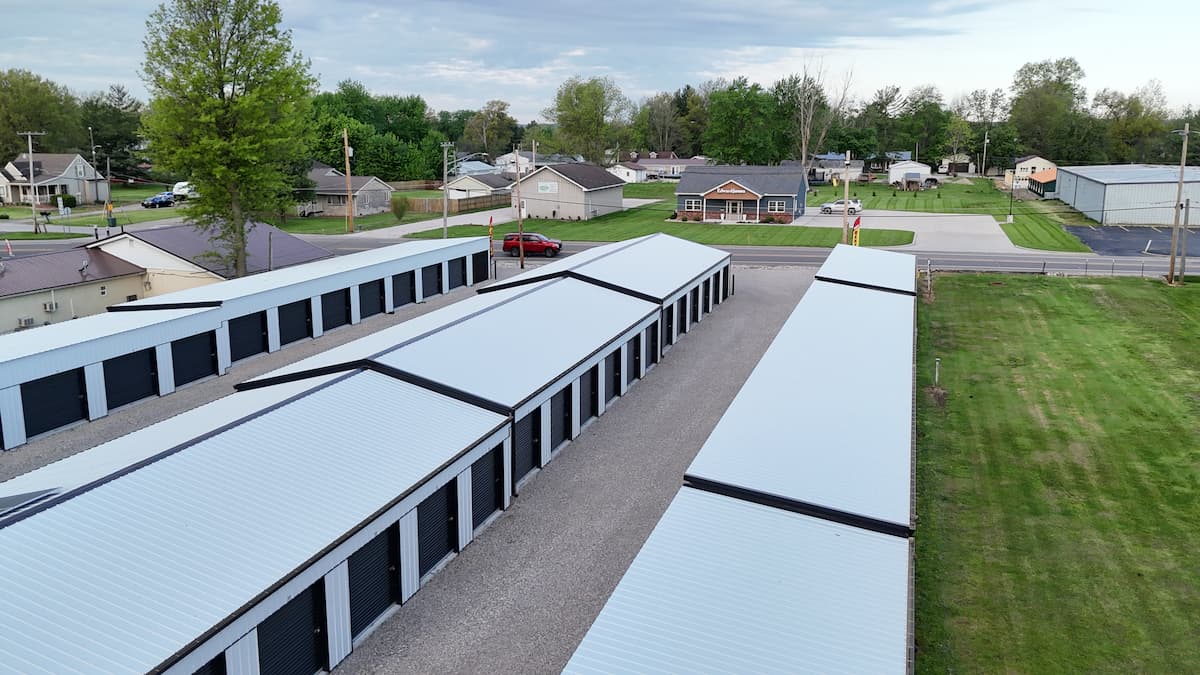
Self-Storage Facility Roofing roof planning built from the roof condition.
Self-Storage Facility Roofing starts with understanding where the roof is failing, how the building is used, and what level of disruption the property can support.
The review connects leak history, membrane condition, flashing details, drains, penetrations, access, and schedule constraints into a practical roof path.
Commercial Roofing Contractors of Boston keeps the next step clear for Boston, MA commercial buildings that need repair, replacement, coating, or maintenance decisions.
Commercial roof scope, documentation, access planning, and weather-aware scheduling for acrylic roof coatings.
Boston's self-storage market is one of the most competitive in New England, with established operators like Extra Space Storage maintaining multiple facilities from Dorchester to the South End, each sitting beneath flat or low-slope roofs that must withstand a demanding climate year-round. The combination of nor'easters dropping two feet of snow in a single event, freeze-thaw cycles that repeat dozens of times each winter, and humid summers that drive moisture into inadequately insulated assemblies makes proper roofing one of the most critical investments a Boston-area storage operator can make.
Snow load is the defining structural and waterproofing challenge for self-storage roofs in Boston. A large facility with 80,000 square feet of roof surface can accumulate hundreds of tons of snow during a major storm. The roof deck must be engineered for these loads, but equally important is the drainage plan for the melt cycle that follows. If drains are clogged or the membrane has low spots that pond meltwater, refreezing creates ice dams at parapet walls and drain collars—conditions that drive water under flashing and into the building. Roofing contractors working in Boston must be fluent in snow management and ice dam prevention, not simply membrane installation.
Freeze-thaw cycling attacks roofing membranes through repeated thermal expansion and contraction. EPDM, long the standard in the Northeast, handles these movements well because of its high elongation properties. TPO has become more prevalent as formulations have improved, and it offers better reflectivity than traditional black EPDM—a meaningful benefit in a city where summer temperatures on dark roofs can exceed 170 degrees Fahrenheit. Both systems, when properly installed and maintained, can achieve 25-year service lives on Boston storage facilities.
The flat footprints of self-storage buildings in Boston are often constrained by dense urban parcels, which means that contractor access for both installation and maintenance requires careful planning. Some Boston facilities have loading dock access only from narrow side streets, requiring material lifts rather than crane delivery. Experienced local contractors account for these logistics in their bids and schedules, while out-of-market firms sometimes underestimate the time and equipment required to work in dense urban conditions.
Tenant belongings protection in a climate as demanding as Boston's requires more than a good membrane. Insulation continuity prevents condensation on cold roof deck surfaces that can drip onto stored goods even when the membrane above is watertight. A minimum of R-25 continuous insulation beneath the membrane eliminates most condensation risk. For climate-controlled facilities, which are increasingly common in Boston as tenants store wine, artwork, and business records, R-30 or higher is the standard, and the vapor retarder placement must be correct for Boston's mixed-humid climate zone.
Drainage design on Boston storage roofs must account for both heavy rain events and the large volumes of snowmelt generated in a single warm day following a major storm. Interior drains should be sized generously—4-inch minimum, 6-inch preferred on large roofs—and scupper overflows must be unobstructed and properly flashed. Tapered insulation systems that create ¼-inch-per-foot slope to drains are strongly recommended because flat roofs in Boston are never truly flat after years of thermal cycling and deck deflection.
Security and surveillance infrastructure at Boston-area storage facilities is extensive given urban crime considerations, and every camera, intercom post, and access-control conduit represents a potential roof penetration. Contractors should create a complete penetration inventory during the pre-construction survey and confirm that every penetration has a properly installed, membrane-compatible boot or pitch pan. Facilities that were re-roofed without this discipline often develop slow leaks within three to five years as improvisatory caulk patches deteriorate.
Cost-effective roofing for self-storage in Boston requires balancing upfront material costs against long-term maintenance obligations. A single-ply TPO or EPDM system installed over new polyisocyanurate insulation by a qualified contractor typically costs more than a simple recover, but it resets the warranty clock and eliminates the risk of trapped moisture in a failing legacy assembly. Many Boston operators who deferred re-roofing found that a catastrophic leak—particularly one that occurred over a holiday weekend—cost more in tenant claims and emergency repairs than a proactive re-roofing project would have.
Working with a roofing contractor who understands Boston's permitting requirements, historic district considerations for facilities near protected neighborhoods, and the specific climate demands of eastern Massachusetts is essential. Verify that any contractor you consider is familiar with Massachusetts building code amendments, carries the required licensing and insurance, and can provide references from comparable storage projects completed within the last five years. The investment in qualified installation protects not just the roof membrane but the entire asset and the tenant relationships that sustain it.
- Spray Foam Roofing
- Preventive Maintenance Programs
- Insulation Recovery Board
- Multifamily Roofing
- Occupied Building Reroofing
- Silicone Roof Coatings
- Roof Drains Scuppers
- Mixed Use Roofing