

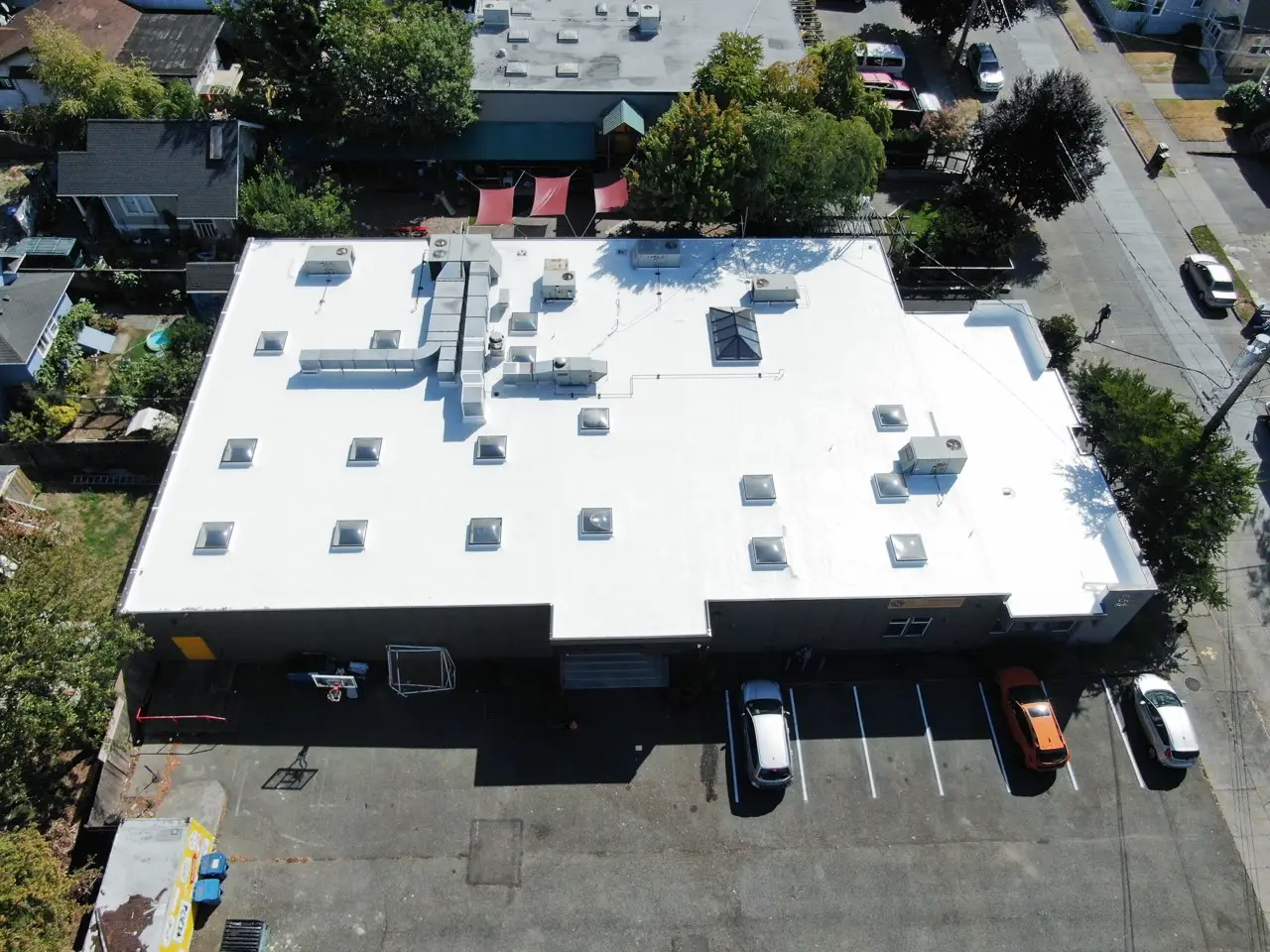
School and K-12 Educational Building Roofing roof planning built from the roof condition.
School and K-12 Educational Building Roofing starts with understanding where the roof is failing, how the building is used, and what level of disruption the property can support.
The review connects leak history, membrane condition, flashing details, drains, penetrations, access, and schedule constraints into a practical roof path.
Commercial Roofing Contractors of Boston keeps the next step clear for Boston, MA commercial buildings that need repair, replacement, coating, or maintenance decisions.
Commercial roof scope, documentation, access planning, and weather-aware scheduling for acrylic roof coatings.
Boston Public Schools—one of the oldest public school districts in America, serving approximately 50,000 students across 130 schools from East Boston to Hyde Park—presents commercial roofing contractors with an institutional portfolio defined by age, urban density, and the regulatory complexity that characterizes every major public works project in Massachusetts. The district's building stock includes structures built in every decade from the late nineteenth century through the 2020s, with roofing systems in correspondingly varied states of repair, and the Boston School Committee's capital planning process sets the pace for how roofing projects advance from need identification through construction completion in one of the most bureaucratically rigorous public procurement environments in the nation.
Summer scheduling in Boston's public school system is the primary operational constraint for roofing work. The Boston Public Schools academic calendar typically releases students in mid-June and returns them in early September—a window of approximately eleven weeks that is the most productive period for roofing work on occupied school buildings. However, Boston summer is also marked by the district's extensive summer school, extended learning time programs, and facility use by community organizations that keep many schools partially or fully occupied through July and August. Contractors must develop detailed site safety and access plans that accommodate these ongoing uses while protecting construction personnel and maintaining productive construction schedules.
Massachusetts prevailing wage law is among the most strictly enforced in the country, and Boston Public Schools projects are covered without exception. The Massachusetts Executive Office of Labor and Workforce Development publishes wage schedules by trade and county that establish minimum rates for all covered workers on public construction projects. BPS facilities contracts require weekly certified payroll submissions, and the city's Office of Equity reviews certified payrolls for compliance with both prevailing wage and the district's workforce diversity requirements. Contractors who lack experience with Massachusetts prevailing wage documentation should partner with a payroll compliance service before bidding BPS projects.
Boston's school buildings include some of the largest occupied institutional roof systems in New England. Boston Latin School, Madison Park Technical Vocational High School, and East Boston High School each have extensive multi-story building complexes with roof areas measured in tens of thousands of square feet distributed across different height levels, construction eras, and membrane system types. Managing re-roofing projects across these multi-wing, multi-era buildings requires detailed phasing plans that sequence work to avoid moisture intrusion into occupied portions, coordinate with building maintenance staff monitoring interior conditions, and maintain emergency weatherproofing protocols during every transition between construction phases.
District-wide roofing programs within Boston Public Schools are managed through the district's Office of Finance and Budget in coordination with the Boston Public Schools Facilities Management department, which oversees capital improvement planning across the district's 130-building portfolio. Boston also participates in the Massachusetts School Building Authority program, which provides funding grants to cities and towns for school construction and renovation projects meeting MSBA eligibility criteria. Roofing projects that align with an MSBA-eligible building renovation qualify for state reimbursement of eligible costs, making MSBA program awareness a meaningful competency for contractors pursuing BPS work.
Budget cycles for Boston Public Schools roofing investments operate on the city's annual budget process, supplemented by multi-year capital improvement plans and periodic bond authorizations. The City of Boston's Capital Planning Office coordinates capital investment across all city departments including BPS, and large roofing projects must compete for capital budget allocation with other infrastructure priorities. Contractors who track BPS capital planning documents—published annually—can anticipate roofing solicitations with enough lead time to build the relationships with facilities staff that inform competitive proposals.
Occupied safety protocols at BPS projects must comply with both Boston's School Safety Officer requirements and the requirements of the Massachusetts Department of Elementary and Secondary Education for any construction activity on active school campuses. The district's standard general conditions include detailed provisions for construction zone fencing, entry control, dust suppression, and emergency evacuation plan coordination that contractors must implement from day one of mobilization. Boston's active parent community and media environment means that any construction-related incident at a school site generates immediate attention, making rigorous safety management both a contractual obligation and a reputational necessity.
Massachusetts building code requires commercial roofing permits for school projects and enforces energy code requirements that apply to major re-roofing triggers. Boston's position in Climate Zone 5 requires minimum continuous insulation R-values for commercial roof assemblies that, when applied to older school buildings with minimal existing insulation, represent significant additional project cost that must be incorporated into budget estimates and bid pricing. The MSBA's Technical Assistance program provides guidance on energy code compliance for school projects that contractors should access when scoping BPS work.
Long-term maintenance relationships with Boston Public Schools facilities staff are cultivated through consistent delivery on project commitments and through the annual inspection programs that identify emerging conditions before they require emergency repairs. The district's deferred maintenance backlog—historically significant across many of its older buildings—means that contractors who can help prioritize spending across multiple buildings based on documented condition data provide valuable planning support that earns continued engagement. Annual condition reports with prioritized repair recommendations and five-year capital replacement projections are the type of deliverable that BPS facilities staff consistently recognize as valuable.
- KEE Single Ply Roofing
- Roof Recover Overlay
- Skylight Penetration Flashing
- Auto Dealership Roofing
- University Campus Roofing
- Built Up Roofing
- Insurance Claim Documentation
- Retail Roofing