

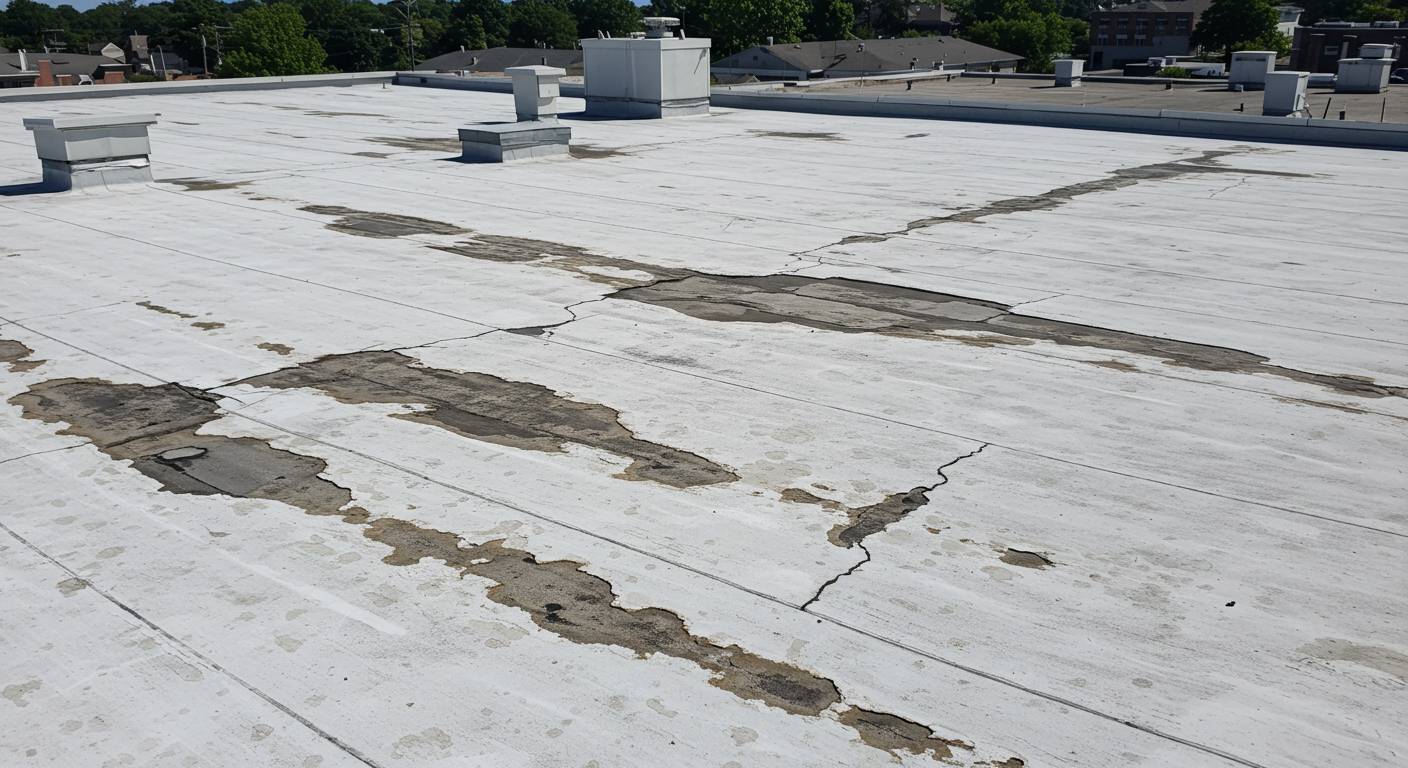
Multifamily and Apartment Building Roofing roof planning built from the roof condition.
Multifamily and Apartment Building Roofing starts with understanding where the roof is failing, how the building is used, and what level of disruption the property can support.
The review connects leak history, membrane condition, flashing details, drains, penetrations, access, and schedule constraints into a practical roof path.
Commercial Roofing Contractors of Boston keeps the next step clear for Boston, MA commercial buildings that need repair, replacement, coating, or maintenance decisions.
Commercial roof scope, documentation, access planning, and weather-aware scheduling for acrylic roof coatings.
The Avalon at Assembly Row in Somerville and the National Development-managed Ink Block complex in the South End represent the high-end multifamily development that has transformed Boston's inner urban neighborhoods over the past 15 years, while the large affordable housing communities managed by the Boston Housing Authority at Orchard Gardens and Whittier Street represent the other end of the spectrum—communities where roofing quality directly affects resident health and safety and where the City of Boston's Inspectional Services Department holds property managers to strict maintenance standards. The Boston metro multifamily roofing market spans this full range, from luxury high-rise towers in the Seaport to three-decker conversion multifamily buildings in Roxbury and Mattapan, and roofing contractors must be equipped for the specific demands of each.
Scheduling roofing work around occupied Boston apartment units is complicated by Massachusetts rental law, which provides some of the strongest tenant protections in the country. A roofing project that causes water intrusion into an occupied Boston apartment may trigger the tenant's right to withhold rent under M.G.L. Chapter 239 Section 8A if the condition makes the unit uninhabitable, and a property manager who proceeds with roofing work that results in habitability issues without the legally required notice and remediation plan faces potential liability under the Massachusetts Consumer Protection Act as well as rental law. Pre-construction planning for occupied Boston multifamily reroofing projects should include review by the building's attorney of the applicable notice and habitability requirements before construction begins.
HOA coordination for Boston's growing condominium market—particularly in the South End, South Boston, and Charlestown condo buildings that were converted from rental inventory over the past 30 years—requires navigating the governance structures established by the condominium master deed and declaration of trust. Massachusetts condominium associations must typically obtain trustee vote approval for common area capital expenditures above a specified threshold, and the trustee vote must be documented before roofing contractors are engaged. Boston-area condominium attorneys who specialize in community association governance are familiar with the specific approval requirements and can provide property managers and board members with the correct process for authorizing a major roofing project within the association's legal framework.
Fire-rated roof assembly requirements for Boston multifamily buildings are governed by the Massachusetts Building Code, which incorporates the IBC fire-rated construction requirements with Massachusetts-specific amendments. Boston's large stock of mid-rise wood-frame multifamily buildings in neighborhoods like Jamaica Plain, Dorchester, and East Boston require fire-rated roof assemblies that specifically address the wood structural deck condition, and the city's Inspectional Services Department has been active in enforcing compliance on reroofing projects on these buildings. Any reroofing project on a Boston wood-frame multifamily building should begin with confirmation that the proposed assembly carries the appropriate UL or FM fire resistance listing for the specific deck type and construction classification.
Balcony and deck waterproofing is a particularly acute issue in Boston's older multifamily building stock, where cast-iron drain connections in concrete balcony decks have often corroded to the point of failure and the waterproofing membrane at the balcony-to-wall transition has long since reached the end of its service life. Boston's rain frequency—over 125 precipitation days per year—means that balcony waterproofing failures rapidly progress to concealed structural damage in the framing behind the wall assembly. Reroofing projects on Boston multifamily buildings should include a mandatory balcony waterproofing assessment as part of the scope, and any building where the roof-to-balcony transition membrane is more than 15 years old should be budgeted for simultaneous renewal with the roof system replacement.
Resident notice procedures for Boston multifamily reroofing projects must comply with the Massachusetts residential notice requirements and with any notice provisions in the tenants' lease agreements. Boston's Just Cause Eviction Ordinance and the city's tenant advocacy community have elevated awareness of tenant rights during construction, and property managers who send deficient or inadequate notices before commencing disruptive construction work in occupied buildings face the risk of formal tenant complaints to the Boston Rental Housing Court. The standard of practice in the Boston multifamily market is to provide written notice at minimum 10 days before construction begins in a given building section, with contact information for the property manager and the roofing contractor's project manager.
Insurance claim handling for Boston multifamily communities must account for the Massachusetts Department of Insurance's oversight of commercial property claims and the state's specific requirements for claim documentation and response timing. Hail events in the Greater Boston area are less frequent than in the Midwest but do occur, and nor'easters produce wind-driven rain that can expose membrane deficiencies that are not otherwise apparent. Boston property managers should maintain pre-storm aerial and ground-level photography of all multifamily roof sections as part of their routine maintenance documentation, with timestamps that establish baseline condition for insurance claim comparison after any event.
Phased replacement for Boston's large affordable housing complexes—many of which were developed by MassHousing and Boston Housing Authority programs in the 1960s and 1970s and are now receiving comprehensive rehabilitation—requires capital planning integrated with the MassHousing preservation financing programs that many of these properties use. A roofing component replacement financed through a MassHousing preservation loan has documentation requirements that the roofing contractor must satisfy, including building permit documentation, licensed contractor verification, and post-completion inspection by MassHousing's property standards team. Contractors who work in Boston's affordable multifamily sector must be familiar with these program requirements and should have experience producing the documentation packages that MassHousing preservation projects require.
Cost per square foot for multifamily roofing in Boston runs $13.00 to $19.00 installed, among the highest in the country, reflecting Massachusetts union labor rates, the complexity of occupied-building protocols in a strong-tenant-rights legal environment, Massachusetts Building Code fire-rated assembly requirements, and the premium for working on buildings with balcony waterproofing and legacy drain conditions that require remediation as part of the roofing scope. MassHousing and BHA projects may be subject to prevailing wage requirements that push installed costs to the top of the range.
- Standing Seam Metal Roofing
- Emergency Tarp Dry
- Church Roofing
- Government Building Roofing
- TPO Single Ply Roofing
- Roof Recover Overlay
- Warehouse Roofing
- Occupied Building Reroofing