

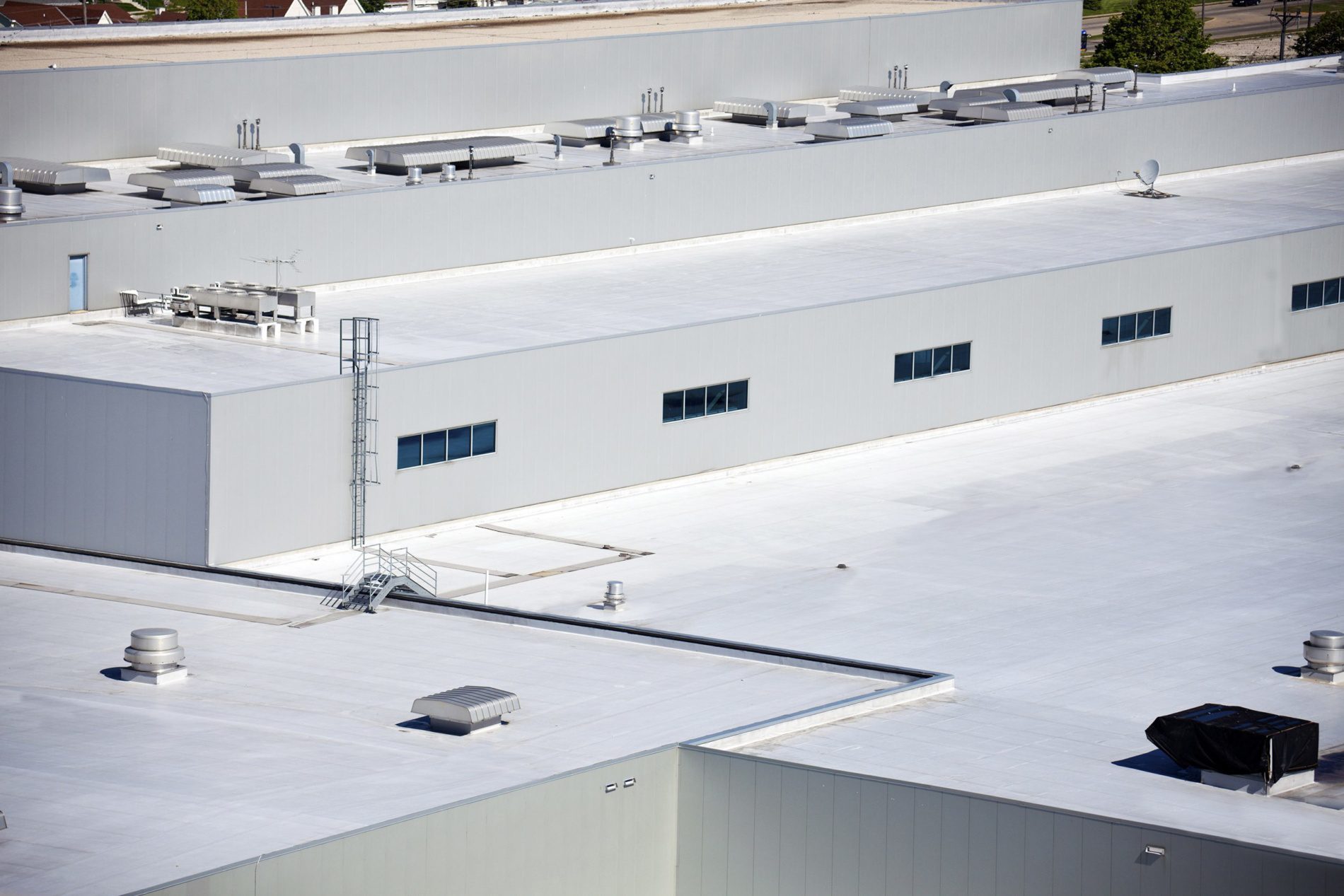
Manufacturing Facility Roofing roof planning built from the roof condition.
Manufacturing Facility Roofing starts with understanding where the roof is failing, how the building is used, and what level of disruption the property can support.
The review connects leak history, membrane condition, flashing details, drains, penetrations, access, and schedule constraints into a practical roof path.
Commercial Roofing Contractors of Boston keeps the next step clear for Boston, MA commercial buildings that need repair, replacement, coating, or maintenance decisions.
Commercial roof scope, documentation, access planning, and weather-aware scheduling for acrylic roof coatings.
Gillette's manufacturing complex in South Boston — part of the sprawling facility that has produced consumer goods on the waterfront since the early twentieth century — represents the kind of densely built industrial campus that defines Boston's manufacturing roofing challenges. These are not simple shed roofs over open floor plates; they are multi-level structures with decades of layered mechanical additions, countless penetration generations, and roof decks that have been re-covered, patched, and modified by a succession of contractors over the years. Understanding what is under the current surface is as important as knowing what goes on top, and in Boston's manufacturing sector that investigative work requires experience with legacy construction.
Boston's coastal climate adds a corrosion dimension to manufacturing roof maintenance that inland cities do not contend with at the same intensity. Salt-laden air accelerates oxidation of steel roof decks, metal edge flashings, and the fasteners that anchor membrane systems to structural framing. Facilities managers at South Boston and East Boston industrial properties should budget for annual inspection of all metal components and should specify marine-grade fasteners and corrosion-resistant edge metal at re-roof. Standard galvanized components that perform acceptably in the Midwest will show premature failure on a Boston waterfront building within a few years.
Vibration profiles at Boston manufacturing facilities vary dramatically by sector. Biopharmaceutical manufacturing along Route 128, which relies on precision fermentation and filling equipment, generates comparatively low-frequency vibration but demands absolute cleanliness at all roof penetrations to protect cleanroom pressure integrity. Legacy industrial operations in Charlestown and Roxbury may run heavy metalworking equipment whose vibration signatures are closer to Rust Belt stamping plants. Each building requires an equipment-specific vibration assessment before a membrane system is selected, because the same TPO product that performs well over a quiet pharmaceutical plant will degrade faster over a heavy-press metal fabricator.
Process exhaust management is particularly complex at Boston's life sciences manufacturing campuses, where chemical exhaust stacks, biosafety ventilation, and process cooling towers may all terminate on the same roof within a few feet of each other. Flashings around these penetrations must accommodate thermal cycling, vibration, and occasional chemical contact. Contractors should specify high-build, chemically resistant flashing systems at these critical nodes and should document every penetration's service type so that future maintenance crews understand the exposure conditions at each location.
Skylights over production floors in older Boston industrial buildings often incorporate wire glass or polycarbonate glazing that is decades past its serviceable life. Replacement during a re-roof project improves both daylighting efficiency and waterproofing integrity, but it requires coordination with plant safety officers because skylights over production areas must maintain fall protection compliance throughout the installation. Contractors working in Boston's industrial sector should be familiar with Massachusetts state construction safety requirements, which impose specific standards for skylight guarding in occupied industrial buildings.
Particulate and drain management at Boston food and beverage manufacturing facilities requires special attention given the city's strict stormwater management requirements. The Boston Water and Sewer Commission enforces pretreatment standards for roof drainage at industrial facilities, and contaminated runoff from manufacturing rooftops can trigger regulatory action. Specifying properly rated drain covers and ensuring that all roof surfaces slope correctly to drain field locations is both a roofing best practice and a regulatory compliance matter for Boston manufacturers.
Production schedule coordination in Boston's manufacturing sector is complicated by the city's strong union labor environment. Re-roofing work that encroaches on production hours, or that requires access through manufacturing areas controlled by different trade agreements, can create jurisdictional complications that delay projects and increase costs. Experienced roofing contractors in Boston understand the local labor landscape and plan access routes, staging areas, and work sequences with union considerations built in from the start.
Load capacity for equipment replacement at Boston's older industrial buildings is a recurring concern. Many structures in South Boston and the Seaport district were built for nineteenth or early twentieth century process loads and have been repurposed multiple times. Before specifying any new rooftop equipment, a qualified structural engineer familiar with Boston's legacy building stock should review the existing framing to confirm that additional point loads can be accommodated without modification.
Capital planning for Boston manufacturing roofs requires factoring in the city's energy code requirements, which are among the most stringent in the country. Massachusetts stretch code mandates minimum insulation R-values that have increased significantly in recent code cycles. A re-roof project at a Boston manufacturing facility is an opportunity to upgrade insulation to current or exceeding-code levels, reducing long-term energy costs and positioning the building for future compliance without another costly project.
- Modified Bitumen Roofing
- Commercial Roof Leak Repair
- Edge Metal Coping Gutters
- Self Storage Roofing
- Restaurant Roofing
- Spray Foam Roofing
- Skylight Penetration Flashing
- Hotel Roofing