

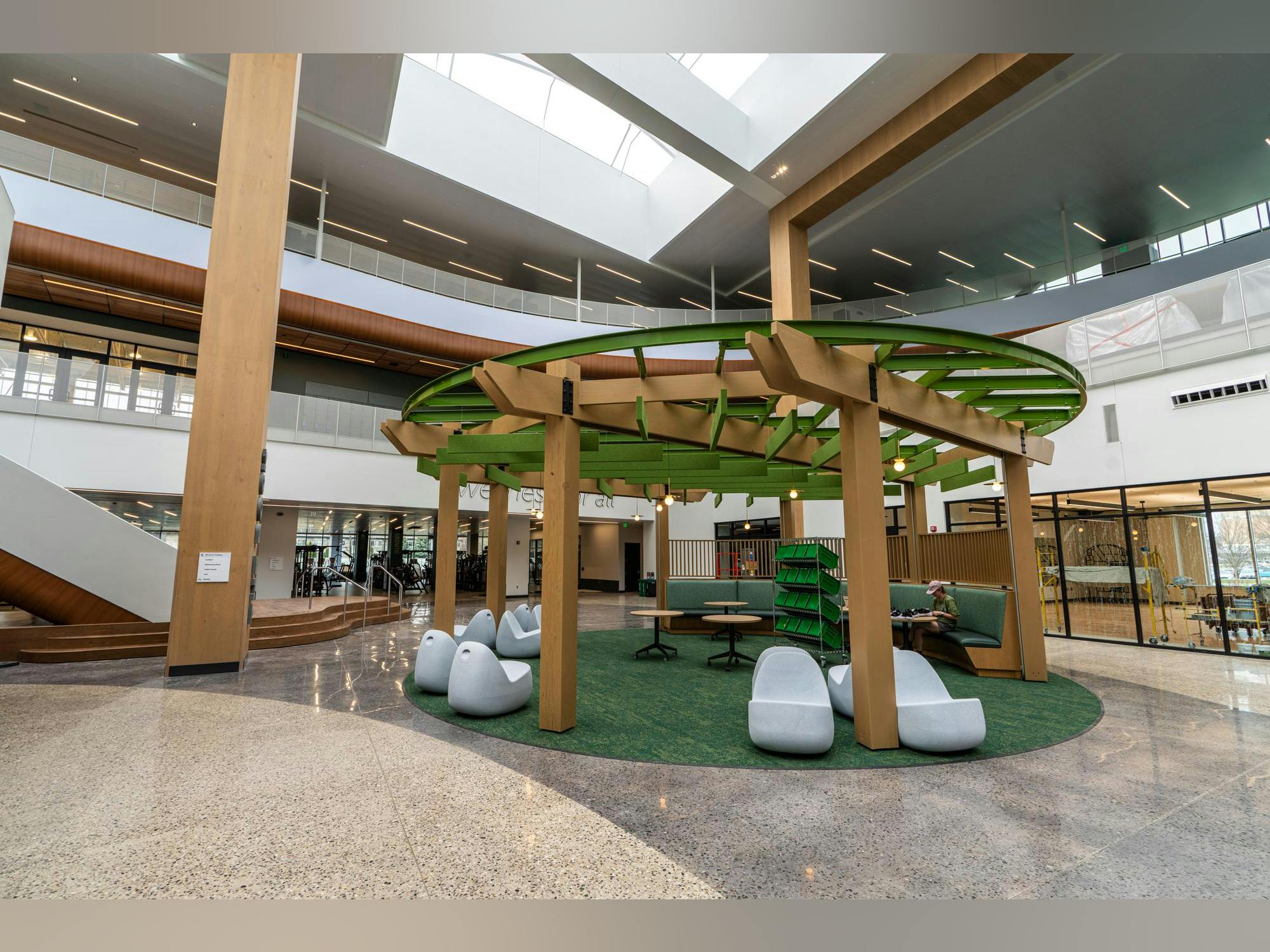
Sports & Recreation Facility Roofing roof planning built from the roof condition.
Sports & Recreation Facility Roofing properties need roof planning that accounts for occupancy, access, staging, rooftop equipment, tenant sensitivity, and the building's operating rhythm.
The roof path may involve leak repair, preventive maintenance, coating review, recover planning, or full replacement depending on the age and condition of the assembly.
Commercial Roofing Contractors of Boston helps organize those choices into clear next steps for commercial buildings in Boston, MA.
Wide spans, pool humidity, and a calendar full of nights and weekends — Boston rec-facility roofing built for all three.
A sports and recreation building is defined by what it does not have: interior columns and an empty schedule. Gymnasiums, field houses, ice rinks, aquatic centers, and indoor sports complexes are wide clear-span structures, and they are busiest exactly when most contractors want to be off the roof — weeknights, weekends, and school holidays. Around Boston this category runs from the municipal community centers and BCYF facilities in the neighborhoods, to the YMCA branches and the Boys and Girls Clubs, to the university field houses and aquatic centers near Allston, the Fenway, and along the Charles, to the private clubs and the indoor turf and ice complexes out along Route 1 and Route 9 in the suburbs. The common thread is a long-span deck carrying real wind-uplift loads, intense occupancy-driven HVAC, and high interior humidity — three conditions that a generic commercial roof spec is not built to handle together.
Span first: matching the attachment to the structure
A roof bay stretching 60, 80, or more feet across a gym or arena floor deflects and lifts under wind in ways a short span does not, and the fastening pattern has to be calculated to the actual deck type and span rather than pulled from a default schedule. Steel deck at an 80-foot span needs different pull-out math than the same deck at 30 feet. We provide the structural deck evaluation and the fastener specification as part of the scope, typically landing on 60-mil or 80-mil TPO mechanically attached over polyiso for these long-span fields, with the attachment density driven by the engineering rather than a guess. It is the same long-span discipline a wide movie-theater deck demands, with the added complication of what is happening in the air below.
Natatoriums are the hardest roof in the category
An indoor pool is the most corrosive environment a roof can sit over. Chlorine reacting with organic matter from swimmers releases chloramine gas, and chloramines eat standard steel flashing, aluminum edge metal, and some membrane adhesives from below. A natatorium roof in Boston needs flashing materials confirmed to resist that exposure — stainless steel or copper where chloramines concentrate — membrane and adhesive selected against the manufacturer's chemical-resistance data, and a ventilation strategy that exhausts pool air to the outside rather than recirculating it against the underside of the deck. On top of the corrosion, the warm wet pool-hall air drives condensation into the assembly unless the vapor retarder sits in the right place for this climate zone, so we survey the existing assembly and scan for trapped moisture before deciding whether to recover or replace. Locker rooms, showers, and dense athletic occupancy add the same vapor load on a smaller scale throughout the rest of the building.
Ice rinks and the cold-side problem
An indoor rink flips the humidity problem: a cold sheet below and warmer humid air above produces aggressive condensation against the deck and demands careful vapor and insulation detailing so the structure does not drip onto the ice or rot from the inside. We spec the assembly to the building's real operating temperatures, not a one-size template.
Large field houses and indoor turf domes add another wrinkle: long runs of continuous ridge venting, translucent skylight panels or fabric sections that let daylight onto the playing surface, and the heavy snow drift that piles against high parapets and tall mechanical screens through a Boston winter. Skylight and daylight-panel perimeters are a classic leak path and get curbed and flashed as engineered details, while drift loading at parapets and screen walls is checked against the structure before we set insulation and attachment in those zones. A clear-span recreation building collects snow unevenly, and the roof has to be detailed for where it actually lands, not for an even blanket that never happens.
Public procurement and a programming calendar
Many Boston rec facilities are public — run by the city, the schools, park authorities, or a YMCA — which means the roof often comes through public bidding with bid and performance bonds and prevailing-wage compliance baked into the timeline. We carry the bonds and insurance for public work in Massachusetts and know the documentation those contracts require. Private clubs and sports-entertainment venues follow a different procurement path but bring their own scheduling pressure from membership programs, league play, and event calendars. Either way we build the work plan from the facility's programming schedule: gym and arena tear-off concentrated in weekday daytime hours with dry-in confirmed before evening programs begin, and any exhaust or supply work over a pool hall coordinated with pool operations so air exchange above swimmers is never interrupted.
Sports & Recreation Facility Roofing Questions
Interior vapor drive from a natatorium needs a vapor retarder positioned correctly for Boston's climate zone. We survey the existing assembly and scan for trapped moisture before specifying a reroof — recovering over a wet or misspecified deck makes the problem worse, so a moisture survey is standard on any aquatic or high-humidity facility.
Chloramine gas corrodes standard metal flashing, aluminum edge metal, and some adhesives. We specify stainless steel or copper flashing where chloramines concentrate, confirm membrane and adhesive compatibility against the manufacturer's chemical-resistance data, and look for ventilation that exhausts pool air outside rather than against the deck.
We build the plan from the facility's programming calendar. Gym and arena work is concentrated in weekday daytime hours with dry-in confirmed before evening programs start, and any HVAC or exhaust work over a pool is coordinated with pool operations so air exchange above swimmers is not interrupted.
Yes. Public work for Boston community centers, park facilities, and school gyms involves bid advertising, bid and performance/payment bonds, and prevailing-wage compliance where applicable. We carry the required bonds and insurance for public work in Massachusetts and know the documentation these contracts require.
Typically 60-mil or 80-mil TPO mechanically attached over polyiso, with the attachment density driven by a structural deck evaluation. An 80-foot steel-deck span needs different fastener pull-out math than a 30-foot span, so we engineer the fastening rather than default it.
- Casino Entertainment Roofing
- Auto Dealership Roofing
- Self Storage Facility Roofing
- Movie Theater Roofing
- Funeral Home Roofing
- Auto Dealership Roofing
- Preventive Roof Maintenance
- Commercial Roof Inspection