

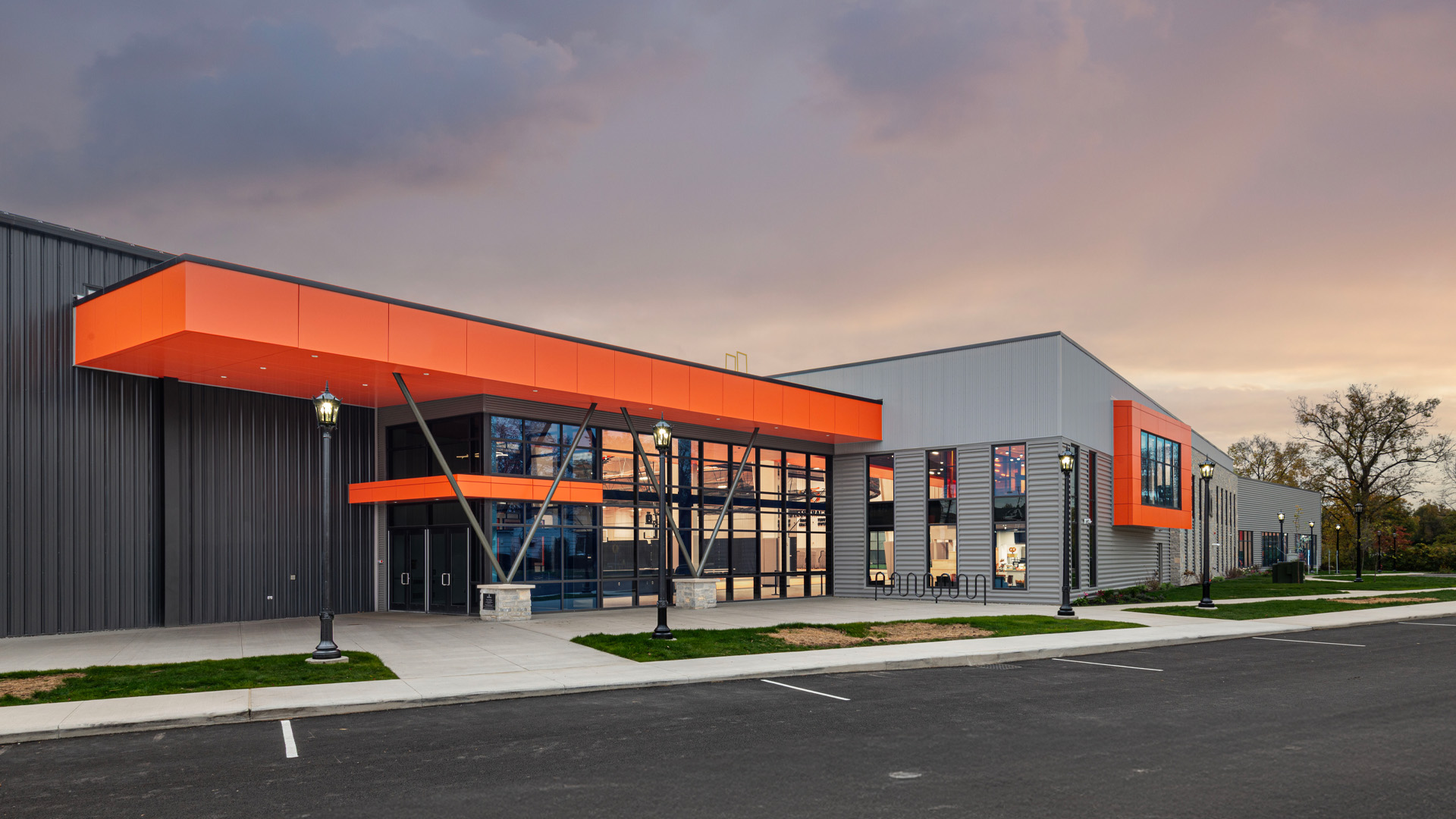
Movie Theater & Cinema Roofing roof planning built from the roof condition.
Movie Theater & Cinema Roofing properties need roof planning that accounts for occupancy, access, staging, rooftop equipment, tenant sensitivity, and the building's operating rhythm.
The roof path may involve leak repair, preventive maintenance, coating review, recover planning, or full replacement depending on the age and condition of the assembly.
Commercial Roofing Contractors of Boston helps organize those choices into clear next steps for commercial buildings in Boston, MA.
Cinema and Movie Theater Roofing in Boston
Boston's moviegoing runs from neighborhood landmarks to suburban multiplexes, and the building stock reflects that range. There are large stadium-seating complexes anchoring retail centers along the Route 1 corridor in Saugus and out the Route 9 and Route 3 belts, dine-in cinemas in the Seaport and Assembly Row in Somerville, and historic single-screen and arthouse houses in Cambridge, Brookline, and Coolidge Corner. We roof all of them, and the thing they share is a roof structure shaped by big rooms with nothing holding up the middle.
That clear-span geometry is where cinema roofing starts. An eight- to twelve-screen multiplex carries roof spans of roughly 80 to 150 feet across each auditorium with no intermediate columns. Those spans deflect under load in ways a retail strip roof never does, and a fastening pattern templated from a strip-mall job will not behave correctly on them. We set fastener density and insulation attachment to the actual deck type and span in front of us, not to a generic flat-roof detail.
Long-span steel deck demands fastener patterns and pull-out testing matched to the rib depth and gauge of the deck that is actually there. Older theaters often have short-rib deck with lower pull-out values than a modern deep-rib profile, and assuming otherwise is how a roof lifts in a Nor'easter. Where deflection across a wide auditorium is a real concern, we may move to an adhered or hybrid system to spread the load and avoid concentrating point loads from mechanical fasteners along the seams. We confirm the deck and substrate with a core sample before committing to an attachment method.
Dense Rooftop HVAC and Penetrations
The mechanical load on a cinema roof is heavy and clustered. Each auditorium typically gets its own rooftop unit, and on top of that the building carries concession exhaust, lobby heating vents, and condensers for the walk-in coolers that serve the food operation. The penetration density above a busy multiplex rivals what we see on a hospital or a data center. Every curb, duct, and conduit run is flashed and documented as an individual item before new membrane goes over it, because a single neglected curb is the leak that ruins a packed Friday-night screening.
- Curb and penetration flashing handled one detail at a time, with each item surveyed and documented before recover.
- Reinforced walkway pads routed to the rooftop units so HVAC service crews do not abrade the membrane over time.
- Tapered insulation to correct the drainage flats that accumulate on decades-old theater roofs and cause ponding.
- Coordination with HVAC service windows so unit and curb work does not collide with show operations.
Insulation, Sound, and the Auditorium Envelope
A theater roof is also part of the acoustic envelope. Patrons expect a quiet, dark room, and rain drumming on a thin deck or sound bleeding between auditoriums undermines the whole experience. The insulation package and assembly thickness contribute to controlling both rooftop rain noise and sound transfer between adjacent rooms, so we treat the buildup as more than a thermal and drainage layer. White single-ply over the right depth of insulation also meets the cool-roof energy-code requirements most local jurisdictions now apply to commercial reroofing permits.
Cinemas run from afternoon into late night, seven days a week, which puts them closer to a 24-hour operation than a 9-to-5 building. We sequence tear-off and dry-in so each section is watertight before the evening screenings begin, and we keep the work clear of evening opening procedures, marquee electrical, and the entry areas where foot traffic builds. HVAC shutdown windows for curb work are coordinated with facilities management in advance so a unit is never down during a sold-out block of shows.
Marquee and Entry Canopy Connections
Marquee signs and entry canopies are chronic leak sources on older theaters because their supports and fasteners penetrate the roof and the canopy-to-building transition flexes over the years. We treat each of these as an individual flashing item and re-detail the transitions as part of the reroof rather than leaving the most visible part of the building as the weak point.
Snow, Drainage, and the Big Flat Decks
The same wide, low-slope decks that make auditorium roofs distinctive also make them snow collectors every New England winter. Large flat areas hold accumulation and drift it against rooftop units, parapets, and screen walls, and the meltwater has to clear through drains that may be spaced far apart on an older theater. Ponding and ice damming over a packed auditorium are exactly what an operator cannot afford on a winter weekend, so we look hard at drain capacity, add tapered insulation where the existing slope has flattened, and plan snow access around the dense mechanical cluster. Freeze-thaw cycling and Nor'easter uplift on an exposed multiplex roof also drive the perimeter and corner fastening, which we set to the local wind case rather than a mild-climate default.
Projection, Concession, and Back-of-House Areas
Not all of the leak risk sits over the seats. Projection and equipment rooms hold sensitive electronics directly below the roof, concession kitchens generate grease-laden exhaust that fouls nearby membrane and demands purpose-built curbs, and walk-in coolers and freezers behind the concession stand bring their own condensers and condensation concerns. We map these back-of-house zones along with the auditoriums, detail the grease-exhaust and refrigeration penetrations specifically, and protect the equipment rooms during the work so a single afternoon of exposure does not take down the projection systems.
Questions From Theater Operators
How do you handle the big open spans over the auditoriums?
We verify the deck type and gauge, test pull-out values, and set the fastener pattern accordingly. On wide spans where deflection is a concern we may use an adhered or hybrid system to avoid concentrating loads at the seams.
Can you reroof without interrupting our shows?
Yes. We sequence the work around your screening schedule, dry in each section before evening shows, and coordinate any HVAC shutdowns for curb work in advance.
Will the new roof help with rain noise and sound between theaters?
The insulation depth and assembly contribute to controlling both rooftop rain noise and sound transfer between auditoriums, so we treat the buildup as part of the acoustic envelope, not just thermal and drainage.
Do you fix the marquee and entry canopy leaks too?
Yes. Marquee supports and entry-canopy transitions are common leak points, and we re-flash and re-detail them as part of every cinema reroof.