

Mixed-Use Development Roofing roof planning built from the roof condition.
Mixed-Use Development Roofing properties need roof planning that accounts for occupancy, access, staging, rooftop equipment, tenant sensitivity, and the building's operating rhythm.
The roof path may involve leak repair, preventive maintenance, coating review, recover planning, or full replacement depending on the age and condition of the assembly.
Commercial Roofing Contractors of Boston helps organize those choices into clear next steps for commercial buildings in Boston, MA.
Retail at grade, residences above, a plaza in between — we roof and waterproof every layer of Boston's mixed-use buildings.
One building, several roofs, several owners' expectations
Mixed-use is the shape of new construction across Boston right now. The Seaport at Seaport Square and Fan Pier, the redevelopment around Assembly Row in Somerville, the towers rising in the Fenway around Van Ness, the transit-oriented blocks at Nubian Square and along the Fairmount corridor, and the adaptive reuse of old industrial buildings in Fort Point all stack ground-floor retail, residential or office floors, structured parking, and rooftop amenity space into a single envelope. That stack is the reason mixed-use roofing is harder than it looks. A building like this rarely has one roof — it has a high membrane roof above the residential floors, a podium deck over the parking or retail base, a planted or paved amenity terrace, and a string of setback roofs at every step in the massing. Each surface carries a different load, a different occupancy below, and a different warranty trigger if it leaks, and they all have to be detailed so water moves cleanly from one to the next.
The podium deck is not a roof, and treating it like one fails
The most expensive mistake on a Boston mixed-use project is specifying a standard roofing membrane on the podium — the structural deck between parking or retail below and occupied space above. That surface takes pedestrian traffic, planter loads, constant hydrostatic pressure where landscaping sits, and the structural deflection of a slab spanning a garage. It needs a traffic-bearing hot-fluid or sheet waterproofing assembly with drainage composite, a root barrier under any greenery, and protection course beneath the wear surface — coordinated with the structural engineer on the load path. We have watched standard membranes recovered as podiums fail within a few seasons, soaking the retail or parking ceiling below. We waterproof the podium as a waterproofing scope and roof the upper levels as a roofing scope, and we keep the two specifications distinct.
Amenity decks where residents actually stand
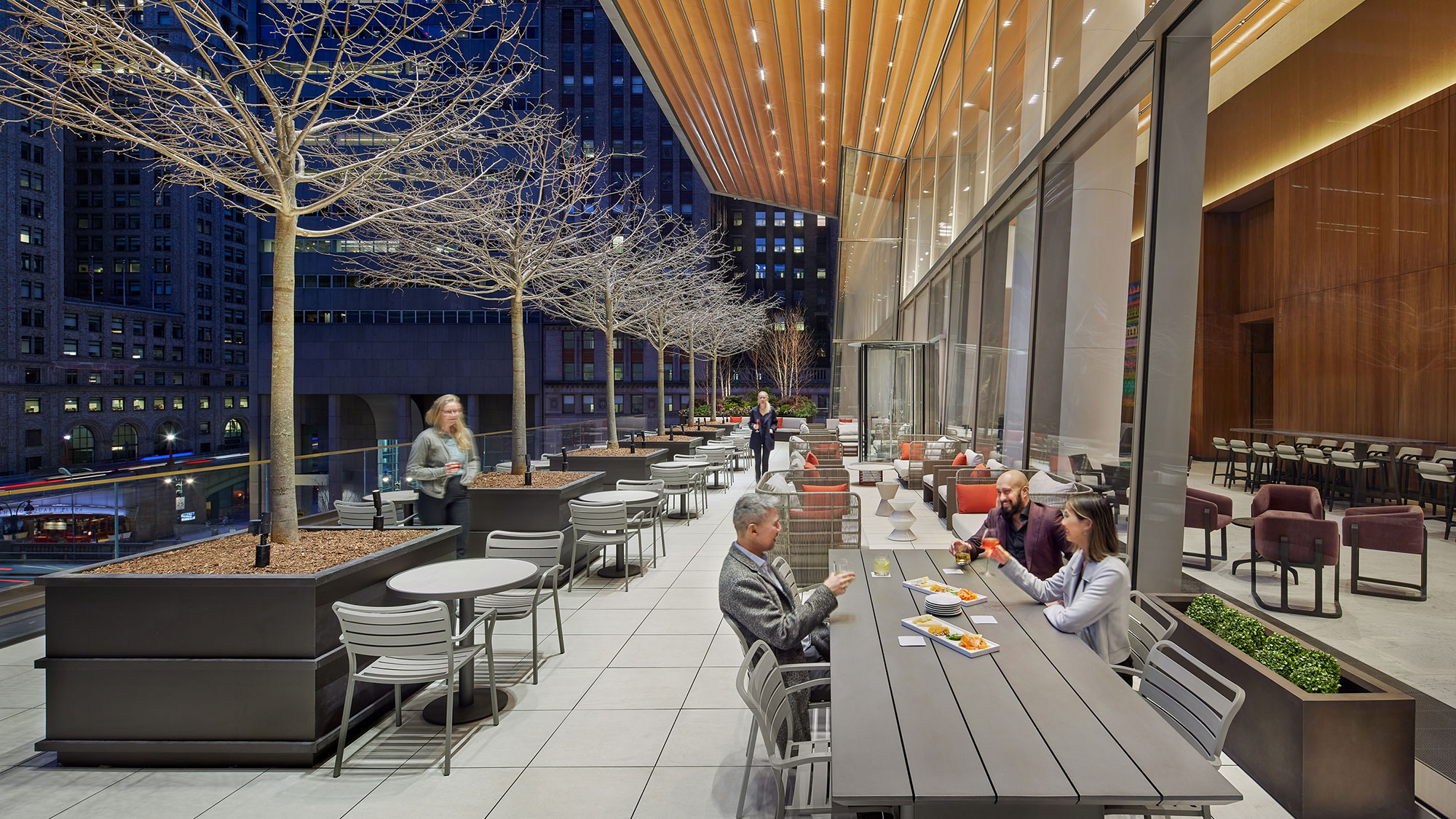
The rooftop amenity terrace — the grilling lounge, the dog run, the pool deck that sells the units — sits over occupied apartments and is the highest-consequence surface on the building. It needs a tested traffic-bearing assembly under pavers or wood sleepers, drainage that keeps standing water off the membrane, and flashings at every railing post, planter, and pergola footing. We install and warranty those assemblies in coordination with the deck-finish contractor and the structural engineer of record, because a leak here lands directly in someone's bedroom and directly on the developer's reputation.
Setbacks, penthouses, and the mechanical maze
The ground-floor restaurant tenants common to these blocks add their own rooftop complication: grease-laden kitchen exhaust fans, makeup-air units, and refrigeration condensers all land on the lowest roof, often directly below the first tier of apartments. Grease accumulation degrades a standard membrane over time, so we specify grease-resistant membrane or a containment detail around those exhaust fans and keep the heaviest mechanical loads detailed for both the deck capacity and the cleaning access the restaurant operator needs. A retail roof that ignores its kitchen exhaust becomes a maintenance and odor problem for the residents one floor up.
Working a building that is occupied, financed, and watched
By the time we are on a mixed-use roof, residents are usually living below and ground-floor retail is open. Boston's noise ordinance governs our hours, the residential lobby and retail entrances stay clear, and dust and debris containment is planned before mobilization, not improvised. These projects also carry a lender and developer paper trail: architect-reviewed submittals, manufacturer technical approval of every assembly, mock-ups and adhesion testing before full installation, QC and manufacturer-rep inspections at the critical phases, and a no-dollar-limit warranty registered at closeout — often with separate warranties for the roof membrane and the waterproofing assemblies. We coordinate that paperwork with the GC, the MEP subs, the structural engineer, and the envelope consultant so warranty coverage on each surface is intact and nobody is fighting over which trade owns a leak after the building is full.
Mixed-Use Development Roofing Questions
Roofing membranes are built for low-slope drainage and light maintenance traffic. A podium deck takes pedestrian or even vehicle loads, planter hydrostatic pressure, root intrusion, and structural deflection over a garage. It needs a traffic-bearing waterproofing assembly with drainage composite and protection course — a standard membrane in that spot typically fails within a few years.
Yes. Amenity terraces get a tested traffic-bearing assembly under the finish surface, drainage to keep standing water off the membrane, and flashing at every railing, planter, and pergola footing — installed and warrantied with the deck-finish contractor and structural engineer.
We work within Boston's noise ordinance hours, keep residential and retail entrances clear, and set up dust and debris containment before mobilizing. The work area is dried in and confirmed watertight before the end of each day, with status reported to building management.
Typically architect-reviewed submittals, manufacturer approval of each assembly, mock-up and adhesion testing, QC and manufacturer-rep inspections at critical phases, and NDL warranty registration at closeout — often separate warranties for the membrane and the waterproofing. We work inside the project's submittal and QC framework start to finish.
Yes. We register and align coverage across the upper roof membrane, the podium, and the amenity deck so each surface is warrantied and there is no gap or finger-pointing about which assembly a leak belongs to.
- Brewery Distillery Roofing
- Manufacturing Plant Roofing
- Hotel Hospitality Roofing
- Grocery Store Roofing
- Car Wash Facility Roofing
- Warehouse Roofing
- Commercial Reroofing
- Standing Seam Metal Roofing